How Perfumes Are Made: From Raw Ingredients to Luxury Fragrances
Perfume is much more than a pleasant scent—it is an art form that combines science, creativity, and craftsmanship. Every bottle of perfume tells a story through carefully selected ingredients and expert blending techniques. From the delicate petals of flowers to rare woods and precious resins, the journey of a perfume begins long before it reaches your dressing table.
In this article, we’ll explore how perfumes are made, the ingredients involved, and the fascinating process that transforms natural and synthetic materials into captivating fragrances.
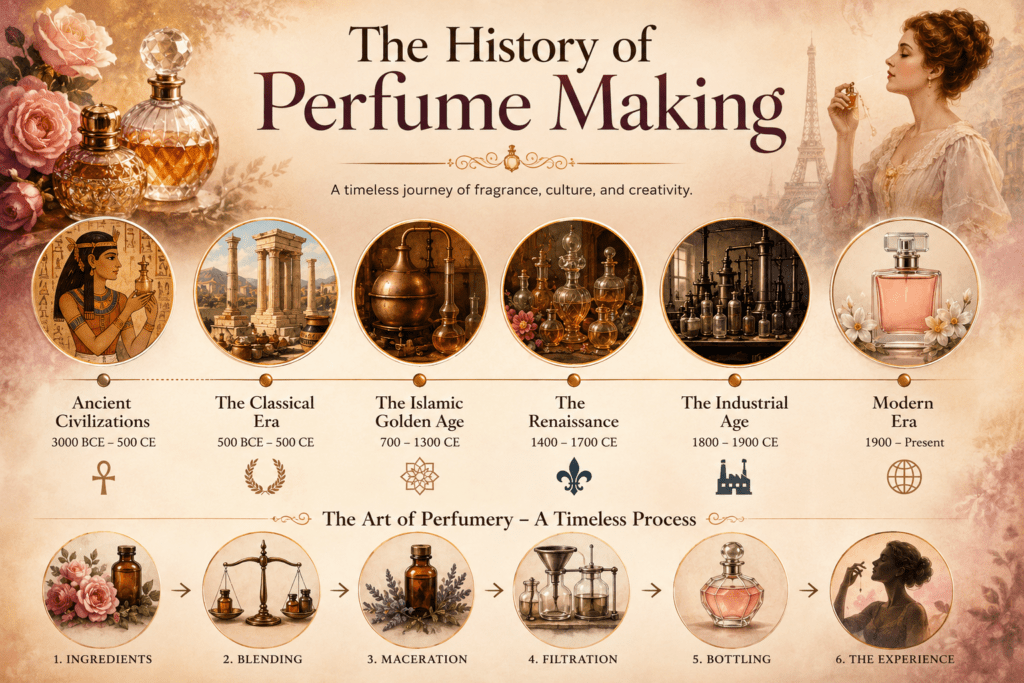
The History of Perfume Making
The art of perfumery dates back thousands of years. Ancient civilizations such as Egypt, Mesopotamia, and India used aromatic oils, herbs, and resins for religious ceremonies, personal grooming, and medicinal purposes. Over time, perfume-making evolved into a sophisticated industry, particularly in France, which remains one of the world’s leading perfume centers today.
Modern perfumery combines traditional methods with advanced technology to create scents that are longer-lasting, more consistent, and uniquely appealing.
Understanding Perfume Ingredients
Perfumes are created using a combination of fragrance materials that can be natural, synthetic, or a blend of both.
Natural Ingredients
Natural perfume ingredients are extracted from plants, flowers, fruits, spices, woods, and resins. Some popular natural ingredients include:
- Rose
- Jasmine
- Lavender
- Sandalwood
- Oud
- Bergamot
- Vanilla
- Patchouli
These ingredients provide depth, richness, and authenticity to fragrances.
Synthetic Ingredients
Synthetic ingredients are laboratory-created aroma molecules designed to replicate natural scents or create entirely new fragrance experiences. They offer several advantages:
- Consistent quality
- Enhanced longevity
- Sustainable production
- Access to unique scent profiles
Many modern luxury perfumes use both natural and synthetic ingredients to achieve the perfect balance.
The Main Components of a Perfume
A perfume typically contains three primary components:
1. Fragrance Oils
These are the aromatic compounds that create the perfume’s scent. Depending on the concentration, fragrance oils usually make up 15% to 40% of the formula.
2. Alcohol
Alcohol acts as a carrier that helps disperse the fragrance evenly when sprayed. It also allows the scent to evaporate gradually, revealing different fragrance notes over time.
3. Water
A small amount of purified water is added to balance the formula and improve stability.
Step 1: Sourcing Raw Materials
The perfume-making process begins with sourcing high-quality ingredients from around the world.
For example:
- Roses from Bulgaria and Turkey
- Jasmine from India and Egypt
- Vanilla from Madagascar
- Oud from Southeast Asia
- Citrus fruits from Italy
The quality of these raw materials significantly influences the final fragrance.
Step 2: Extracting Fragrance Oils
Once the ingredients are collected, perfumers extract their aromatic compounds using various methods.
Steam Distillation
This is one of the most common extraction methods. Steam passes through plant materials, carrying aromatic oils that are then condensed and collected.
Solvent Extraction
Delicate flowers such as jasmine are often processed using solvents that capture their fragrance compounds without damaging their scent.
Cold Pressing
Primarily used for citrus fruits, this method mechanically presses the peel to release essential oils.
CO₂ Extraction
A modern technique that uses pressurized carbon dioxide to extract pure fragrance compounds while preserving their natural aroma.
Step 3: Creating the Fragrance Formula
This is where creativity meets science.
Professional perfumers, often called “noses,” blend dozens or even hundreds of ingredients to create a unique fragrance composition.
A perfume is usually structured into three layers:
Top Notes
These are the first scents noticed after application. They are light, fresh, and evaporate quickly.
Common top notes include:
- Lemon
- Bergamot
- Orange
- Mint
Heart Notes
Also known as middle notes, these emerge after the top notes fade and form the core of the fragrance.
Popular heart notes include:
- Rose
- Jasmine
- Lavender
- Geranium
Base Notes
Base notes provide depth and longevity, remaining on the skin for several hours.
Common base notes include:
- Oud
- Sandalwood
- Vanilla
- Amber
- Musk
The careful balance of these notes creates a fragrance’s unique character and performance.
Step 4: Blending the Ingredients
After the formula is finalized, the fragrance oils are mixed with alcohol and water in precise proportions.
This stage requires exceptional accuracy because even small adjustments can dramatically alter the scent profile.
Luxury perfume brands often spend months or even years perfecting a single fragrance before releasing it to the market.
Step 5: Aging and Maturation
Just like fine wine, perfumes benefit from maturation.
After blending, the perfume mixture is stored in stainless steel or glass containers for several weeks or months. During this time:
- Ingredients blend harmoniously
- Sharp edges soften
- Fragrance complexity increases
This maturation process allows the perfume to achieve its intended scent profile.
Step 6: Filtration and Quality Testing
Once maturation is complete, the perfume undergoes filtration to remove any impurities or sediment.
Quality control teams then evaluate:
- Fragrance consistency
- Stability
- Color
- Longevity
- Skin compatibility
Only perfumes that meet strict quality standards proceed to bottling.
Step 7: Bottling and Packaging
The finished perfume is carefully filled into bottles designed to protect the fragrance from light and air exposure.
Luxury perfume packaging often includes:
- Elegant glass bottles
- Decorative caps
- Premium boxes
- Protective seals
Packaging plays an important role in creating a memorable customer experience and reflecting the brand’s identity.
Why Some Perfumes Last Longer Than Others
The longevity of a perfume depends on several factors:
- Concentration of fragrance oils
- Quality of ingredients
- Presence of rich base notes
- Skin chemistry
- Environmental conditions
Perfumes with higher oil concentrations, such as Extrait de Parfum and Eau de Parfum, generally last longer than Eau de Toilette or Eau de Cologne.
The Future of Perfume Making
Modern perfumery continues to evolve with advancements in sustainability and fragrance technology. Many brands now focus on:
- Ethically sourced ingredients
- Eco-friendly packaging
- Sustainable production methods
- Innovative synthetic molecules
These developments allow perfumers to create exceptional fragrances while reducing environmental impact.
Conclusion
The process of making perfume is a fascinating blend of art, science, and craftsmanship. From sourcing rare ingredients and extracting precious oils to blending, aging, and bottling, every step contributes to the final fragrance experience. Whether it’s a fresh citrus scent, a romantic floral bouquet, or a rich oud-based masterpiece, each perfume represents countless hours of expertise and creativity.
Understanding how perfumes are made not only deepens our appreciation for fine fragrances but also helps us choose scents that best reflect our personality and style. The next time you spray your favorite perfume, you’ll know the incredible journey behind every drop.
Looking for long-lasting luxury perfumes? Browse RocheHayatt’s premium fragrance collection featuring captivating scents for every occasion. Start your fragrance journey at RocheHayatt Perfumes